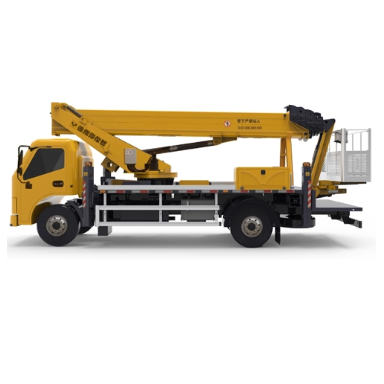
When contractors, rental fleet managers, industrial maintenance teams, and construction procurement departments evaluate a forklift aerial platform as a cost-saving access solution, the initial logic seems reasonable: the forklift is already on site, the attachment is relatively inexpensive, and the job looks straightforward. But when the work involves 37 meters of height, façade access, steel structure installation, or plant maintenance where reach, stability, and worker safety are non-negotiable, the comparison changes entirely. This guide is written for B2B buyers who need to understand the real difference between a temporary forklift-mounted work platform and a purpose-built vertical tower aerial lift system—specifically Handler's 37M Hybrid Boom Aerial Work Platform, which combines six telescopic booms, an additional jib, electric-hydraulic proportional control, 37m maximum working height, 25m maximum working radius, and bucket rated load options of 120/260/400 kg into a dedicated high-altitude access solution designed for serious construction and industrial applications.
The pain point for B2B buyers is not that forklift-mounted platforms are always wrong. In controlled, low-height, properly approved conditions, they can serve a limited purpose. The problem is that buyers frequently apply a low-height solution to a high-altitude problem—and the consequences of that mismatch are not minor.
OSHA is explicit on this point: forklifts used to support work platforms must comply with scaffold-related requirements covering capacity, construction, access, use, fall protection, and training. If the forklift operator manual prohibits elevating personnel platforms, OSHA prohibits that use entirely. This means the compliance burden on a forklift aerial platform deployment is significant, and the margin for error is narrow.
At 37 meters, the safety challenge is categorically different from low-height access work. The variables that must be controlled include:
Center of gravity shift as the platform rises and extends
Overturning moment under wind load and platform occupant movement
Platform leveling as ground conditions change
Boom deflection under load at full extension
Hydraulic system reliability for controlled descent
Emergency lowering capability if primary controls fail
Fall protection anchorage points rated for the platform height
Load sensing and rated capacity enforcement
Signal reliability for remote or ground-based control
Structural integrity under combined vertical and horizontal loading
A forklift aerial platform addresses none of these variables through engineered design. It depends on the forklift's existing stability envelope, the attachment's mechanical connection, the operator's judgment, and the ground conditions remaining constant throughout the lift. At 37 meters, that dependency is not a manageable risk—it is an unacceptable one.
For B2B buyers, the downstream consequences of choosing the wrong access method at height include worker fall risk, tip-over incidents, insurance and compliance exposure, project delays from safety authority intervention, higher supervision burden, and procurement decisions that cannot be defended in a post-incident review. The initial cost saving of a forklift attachment disappears entirely when measured against these outcomes.
A forklift aerial platform is an attachment-based solution. It borrows the forklift's lifting capacity and stability envelope for a purpose the machine was not originally designed to serve. A 37M Hybrid Boom Aerial Work Platform is an engineered access system—designed from the ground up to position people safely at height, with every subsystem calculated, tested, and certified for that specific purpose.
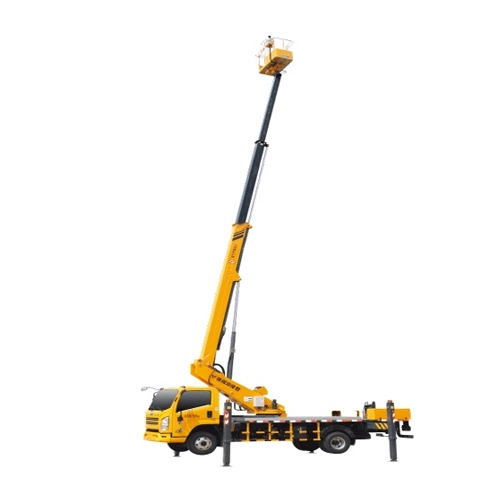
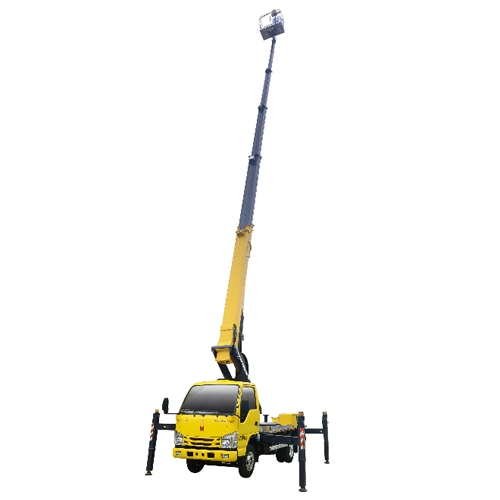
Handler's 37M Hybrid Boom Aerial Work Platform is built around six telescopic booms and an additional jib, providing a 135° lifting angle and a jib movement range of -105° to 30° for working upward after crossing obstacles. The platform uses an electric-hydraulic proportional control system for smooth, precise movement. The two-person aluminum bucket measures 1800 × 700 × 1100 mm with ±90° rotation capability. Control options include ground control, bucket control, turret control, and remote control, allowing operators to select the appropriate mode for each working scenario.
| Evaluation Factor | Forklift Aerial Platform | Handler 37M Hybrid Boom |
|---|---|---|
| Primary purpose | Temporary personnel lifting attachment | Dedicated high-altitude work platform |
| Maximum working height | Limited by forklift mast configuration | 37m engineered maximum |
| Horizontal working radius | Very limited | 25m maximum working radius |
| Platform control | Forklift-controlled from ground | Ground, bucket, turret, and remote control |
| Obstacle access | Poor | Telescopic boom and jib for obstacle crossing |
| Stability system | Depends on forklift design and ground | Purpose-built boom structure and support |
| Bucket rated load | Depends on forklift capacity and attachment | 120 / 260 / 400 kg options |
| Safety certification | Complex compliance path | Purpose-built MEWP certification |
| Best application | Low-height controlled maintenance | Construction, industrial, utility, façade, high-altitude |
This comparison is most relevant for construction contractors evaluating access equipment for high-rise or large-structure projects, equipment rental companies building or upgrading their aerial work platform fleet, industrial plant maintenance teams planning shutdown access, power and utility service companies requiring high-reach access, municipal engineering procurement teams, and safety managers reviewing access method approvals for complex jobsites.
The key message is straightforward: a forklift-mounted platform is an attachment. A hybrid boom aerial work platform is an engineered system. At 37 meters, only one of these is the right tool.
Safety is where the comparison between a forklift aerial platform and a purpose-built vertical tower aerial lift system becomes most consequential for B2B buyers. Understanding the applicable safety standards and what they require helps procurement teams write better specifications and make more defensible purchasing decisions.
For buyers researching safety standards for high-altitude work platforms, the regulatory framework is clear and demanding.
OSHA defines aerial lifts as vehicle-mounted devices used to elevate personnel, including extendable boom platforms, articulating boom platforms, vertical towers, and combinations of these. OSHA identifies the primary hazards as falls, tip-overs, ejection from the platform, structural failure, electrocution, and falling objects. OSHA 1910.67 requires aerial lifts acquired after July 1, 1975 to be designed and constructed in conformance with applicable ANSI A92.2 requirements, and mandates trained operators, daily testing of lift controls, personal fall arrest or travel restraint systems attached to the boom or basket, and strict compliance with manufacturer load limits.
The ANSI/SAIA A92 standards provide the detailed technical framework: A92.20 covers design, calculations, safety requirements, and test methods for mobile elevating work platforms; A92.22 covers safe use requirements; and A92.24 covers training requirements for operators, supervisors, and maintenance personnel. For international projects, EN 280 and ISO 16368 provide equivalent frameworks in European and global markets.
A forklift aerial platform does not arrive with MEWP certification. It requires a separate compliance analysis, forklift manufacturer approval, attachment certification, and site-specific risk assessment before it can legally be used to lift personnel in most jurisdictions. A purpose-built boom platform arrives with this documentation as part of the product.
A dedicated high-altitude platform is designed around the complete lifting system, not assembled from components with different design origins. The engineering covers:
Boom geometry and deflection calculations at full extension
Stabilizer and outrigger deployment logic and ground pressure limits
Load charts that define safe working loads at every combination of height and radius
Hydraulic control system with proportional valves for smooth, controlled movement
Emergency lowering system independent of primary hydraulic power
Safety interlocks that prevent unsafe boom configurations
Platform leveling system that maintains a usable work surface as the boom extends
Wind speed limits with operator guidance
Structural calculations certified by a qualified engineer
Fall protection anchorage points rated for the platform height and occupant load
Handler's 37M model includes automatic platform leveling, multiple control modes, and a purpose-built boom structure with six telescopic sections and an additional jib—all integrated into a single engineered system. This is the difference between a machine designed to lift people safely at 37 meters and an attachment designed to carry loads on a forklift.
OSHA recommends pre-start inspections before each work shift covering vehicle components, lift controls, personal protective equipment, hydraulic and electrical systems, stabilizers, mechanical fasteners, warning labels, and guardrail systems. For buyers managing fleets or project deployments, this inspection requirement is easier to fulfill with a purpose-built platform that has a defined inspection checklist than with a forklift-attachment combination that requires separate inspection of two different machines and their interface.
Safety is the threshold requirement. Productivity is where the forklift aerial platform vs hybrid boom comparison becomes a business case argument for B2B buyers who need to justify the investment in a dedicated platform.
High-altitude construction rarely requires only vertical lifting. Workers accessing a façade need to reach over parapets. Steel structure installation requires positioning at angles that change as the work progresses. Plant maintenance requires reaching over equipment, pipes, and structural members. Utility access requires working around existing infrastructure. In all of these scenarios, the ability to extend horizontally—not just vertically—determines how many times the machine must be repositioned and how long each work cycle takes.
A forklift aerial platform provides essentially no horizontal outreach beyond the forklift's mast position. The machine must be repositioned for every change in horizontal access requirement. On a large façade or complex industrial structure, this repositioning time accumulates into a significant productivity loss.
Handler's 37M Hybrid Boom provides 25 meters of maximum working radius. The six telescopic booms and additional jib allow the operator to reach over obstacles, extend horizontally to access façade sections, and adjust the working position without moving the machine. The jib's -105° to 30° movement range specifically addresses the common construction requirement of reaching upward after crossing an obstacle at the building edge.
A hybrid boom platform is particularly valuable for contractors who work across both outdoor construction sites and indoor industrial environments. Outdoor work requires the mobility and power of a diesel or hybrid drive system. Indoor work in warehouses, factories, or enclosed facilities requires cleaner operation with lower emissions and noise.
Handler's hybrid boom platform positioning supports this mixed-use requirement, allowing contractors to deploy a single machine across project types that would otherwise require separate equipment for indoor and outdoor access. For rental fleet operators, this flexibility increases utilization rates and reduces the number of machine types required to serve a diverse customer base.
| Job Requirement | Forklift Aerial Platform | Handler 37M Hybrid Boom |
|---|---|---|
| Vertical lift to 37m | Not practical | Designed for this height |
| Horizontal outreach | Very limited | 25m working radius |
| Working over obstacles | Poor | Strong with telescopic boom and jib |
| Multi-point façade access | Requires frequent repositioning | More efficient with extended reach |
| Indoor/outdoor flexibility | Depends on forklift type | Hybrid platform supports broader project use |
| Operator positioning precision | Limited | Electric-hydraulic proportional control |
| Bucket rotation | Not applicable | ±90° bucket rotation |
| Two-person operation | Depends on attachment rating | 1800 × 700 × 1100 mm two-person bucket |
| Component | What to Check | Why It Matters |
|---|---|---|
| Platform/bucket | Size, rated load, guardrails, anchorage points | Protects workers and tools at height |
| Boom system | Telescopic sections, jib angle range, stiffness | Determines height and outreach capability |
| Stabilizers/outriggers | Deployment range, pad size, ground pressure | Controls stability on varied ground |
| Leveling system | Automatic or assisted leveling | Keeps platform usable and safe at height |
| Hydraulic system | Proportional control, emergency lowering, safety valves | Affects precision and safety |
| Control system | Bucket, ground, turret, remote control modes | Supports operation and emergency response |
| Power system | Hybrid, diesel, electric, battery | Affects indoor/outdoor project flexibility |
| Safety certification | ANSI/OSHA/CE/EN documentation | Supports compliance and tender approval |
| Maintenance access | Hydraulic, boom, pins, electrical inspection points | Reduces downtime |
| Documentation | Manual, load chart, inspection checklist | Supports safe daily operation |
Handler's 37M Hybrid Boom Aerial Work Platform serves a wide range of high-altitude access requirements:
High-rise and large-structure construction
Façade installation, repair, and cleaning
Steel structure assembly and inspection
Airport, stadium, and large venue maintenance
Industrial plant and refinery maintenance
Power generation and utility access
Municipal infrastructure and street lighting
Bridge and road facility maintenance
Large warehouse lighting, HVAC, and sprinkler access
Commercial building exterior maintenance
Telecommunications tower and rail infrastructure access
Purpose-built safety design for 37m working height
25m working radius reduces machine repositioning time
Six telescopic booms and jib for obstacle-crossing access
Multiple control modes for flexible operation
Hybrid power for indoor and outdoor project coverage
Higher productivity on façades and large structures
Stronger compliance documentation for safety-conscious tenders
Better fit for projects requiring dedicated MEWP certification
Long-term rental fleet value for contractors and equipment companies
Reduced supervision burden compared with forklift attachment solutions
Before choosing between a forklift aerial platform and a 37M hybrid boom, buyers should clarify:
What is the required maximum working height?
What horizontal reach is needed for the specific job geometry?
Does the work require reaching over obstacles or around structures?
Is the platform used indoors, outdoors, or both?
What platform load is required for workers, tools, and materials combined?
What safety standards apply in the project region?
Is ANSI, OSHA, CE, EN 280, or ISO documentation required for tender?
What ground conditions will the machine operate on?
Are trained MEWP operators available or does training need to be arranged?
Is the goal short-term project access or long-term fleet ROI?
Before contacting Handler, prepare the following:
Target application and industry
Maximum working height requirement
Required working radius
Platform load requirement and number of operators
Indoor/outdoor usage ratio
Hybrid power requirement
Site ground condition and slope
Obstacle-crossing requirement
Control mode preference
Safety certification requirement
Local regulation and tender documentation requirement
Maintenance capability and service plan
Operator training plan
Delivery destination and quantity
Warranty and spare parts requirement
Rental fleet or project-use plan
 Mastering Special Vehicles Maintenance: Essential Tips for LongevityApril 9, 2024Special vehicle maintenance should be paid special attention to, the more detailed the special vehicle maintenance, the longer the special vehicle driving age will be maintained. The fall season is th...view
 Successful Launch of Intelligent Manufacturing MOM ProjectJune 4, 2024On the morning of May 21, the kickoff meeting for HANDLER's Intelligent Manufacturing MOM (Manufacturing Operations Management) project was successfully held. The company's general manager, Yi...view
 Xuzhou Handler's Blue-Plate 28-Meter Aerial Work Platform Vehicle Classic Upgrade!February 29, 2024As the Spring Festival approaches, Helenzhe's 28-meter aerial work platform vehicle enters a booming sales mode, igniting the festive atmosphere of the Spring Festival.Since the launch of the blue...view
 Navigating Aerial Work Efficiency: Different Types of MEWPsApril 9, 2024In the field of modern aerial work, different types of MEWPs play a pivotal role. They not only excel in the fields of construction, engineering, and shipbuilding but also provide safer and more effic...view
 The Role of Emergency Vehicles in Disaster Response and ManagementApril 9, 2024Emergency vehicles play a vital role in disaster response and management, providing fast and efficient assistance in times of crisis. From ambulances to fire trucks to specialized rescue vehicles, the...view
 Warm Congratulations to the 38th Anniversary Celebration of Malaysia Mobile Crane Owners AssociationJune 4, 2025On April 26, 2025, the Malaysia Mobile Crane Owners Association (1987) grandly held its 38th anniversary celebration at Monkeys Canopy Resort. This anniversary celebration, themed "United Progres...view