When a fire breaks out in a high-risk environment, the biggest challenge is often not only extinguishing the flames but also gaining safe access to the area where decisions must be made. Extreme heat, dense smoke, toxic gases, and unstable structures can prevent firefighters from approaching critical locations, creating a demand for intelligent equipment that can operate where humans cannot.
This is where fire fighter robots are becoming an important part of modern emergency response systems. Designed to enter hazardous zones, deliver firefighting support, and provide real-time information, these robotic platforms help reduce risks while improving the efficiency of rescue operations. However, their value depends on one essential factor: reliability under extreme conditions.
A dependable firefighting robot must do more than move and perform basic tasks. It needs to withstand high temperatures, maintain stable communication, navigate complex terrain, and continue operating when environmental conditions become unpredictable. These requirements have pushed professional fire fighting robot manufacturers to focus on advanced mechanical structures, protective technologies, intelligent control systems, and application-oriented design.
Understanding what makes a firefighting robot reliable provides valuable insight for emergency organizations, industrial facilities, and safety managers looking for solutions that can perform effectively in real fire and rescue environments.
The fireground is one of the most challenging operational environments for any robotic system. Unlike robots designed for controlled industrial conditions, firefighting robots must perform under rapidly changing situations where heat, smoke, debris, and unpredictable hazards can appear at any moment.
Professional fire fighting robot manufacturers focus on creating systems that combine mechanical strength, environmental protection, mobility capability, and intelligent control. Every component, including the chassis, drive system, electronic modules, sensors, and communication equipment, must work together to maintain stable operation during emergency missions.
A reliable fire fighter robot is usually developed around several key engineering requirements. The structure needs enough strength to withstand impacts from debris, while the internal systems require protection against dust, moisture, and heat. At the same time, the robot must remain easy for operators to control even when visibility is limited and the surrounding environment is constantly changing.
For organizations evaluating firefighting solutions, understanding different robot configurations, functional options, and application scenarios is essential before selecting suitable equipment. Handler GP provides a range of robotic solutions designed for different operational requirements, allowing users to explore available firefighting robot products and technical solutions in detail.
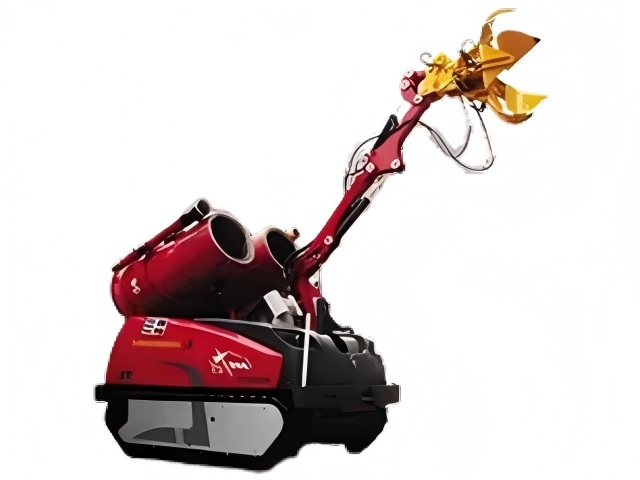
Heat resistance is one of the most important indicators of firefighting robot reliability. During fire rescue operations, robots may need to approach areas where temperatures are extremely challenging for traditional equipment. Without proper protection, critical components such as motors, batteries, control systems, and sensors may experience performance degradation or failure.
To maintain operation in harsh environments, advanced fire fighter robots are designed with protective structures, reinforced materials, sealed electrical systems, and optimized thermal management solutions. These features help reduce the impact of heat, water, smoke, and physical damage during missions.
| Protection Area | Engineering Focus | Impact on Reliability |
|---|---|---|
| Robot Structure | Heat-resistant and impact-resistant materials | Improves durability in dangerous environments |
| Electronic Components | Protected control systems and sealed modules | Maintains stable operation under harsh conditions |
| Drive System | Reinforced motors and durable mechanical design | Supports continuous movement across difficult terrain |
| External Protection | Water and dust resistance | Reduces risks caused by firefighting conditions |
Experienced fire fighting robot manufacturers understand that reliability cannot depend on a single protective feature. Instead, it requires the integration of material selection, structural engineering, electronic protection, and repeated performance testing.
A firefighting robot can only provide meaningful support when it is able to reach locations that are too dangerous or inaccessible for humans. Mobility performance is therefore one of the most important factors influencing real-world effectiveness.
Modern fire fighter robots often use tracked systems or reinforced wheel structures to move across uneven surfaces, industrial floors, stairs, and areas affected by debris. These designs improve stability and traction, allowing robots to maintain movement in complex rescue environments.
Remote control capability is equally important. Firefighters need to operate robots from a safe distance while maintaining accurate control over movement, firefighting equipment, and information collection. Reliable communication systems help ensure that commands can be transmitted effectively even when obstacles or environmental interference exist.
Advanced remote operation technologies may include long-distance wireless communication, real-time video transmission, navigation assistance, and integrated control interfaces. For fire fighting robot manufacturers, creating a dependable remote system requires balancing communication stability, operational simplicity, and environmental adaptability.
The role of fire fighter robots has expanded beyond basic fire suppression. Modern systems are designed to support multiple emergency response tasks, helping firefighters manage dangerous situations more efficiently.
Depending on their configuration, firefighting robots can assist with water or foam delivery, hazardous area inspection, emergency scene monitoring, equipment transportation, and industrial fire response operations. These capabilities allow robots to handle initial operations in high-risk areas while reducing direct exposure for human personnel.
| Aspect | Traditional Fire Response | Fire Fighter Robots |
|---|---|---|
| Safety Risk | Personnel may need to enter hazardous areas directly | Operators can control equipment remotely |
| Environmental Resistance | Limited by human protection equipment | Designed for extreme operating conditions |
| Information Collection | Depends mainly on human observation | Provides visual and sensor-based information |
| Operational Flexibility | Restricted by physical limitations | Supports extended remote operations |
As industries face increasingly complex safety challenges, demand for professional fire fighting robot manufacturers continues to increase. Reliable robotic systems provide an additional layer of protection for facilities where fire risks are difficult to control through traditional methods alone.
One of the greatest advantages of fire fighter robots is their ability to collect information from environments where human visibility and mobility are severely limited.
Smoke, darkness, heat, and structural obstacles can make traditional inspection extremely difficult during a fire. Advanced firefighting robots use integrated sensing technologies to help operators understand the conditions ahead and make better decisions.
High-definition cameras, thermal imaging systems, environmental sensors, and communication modules allow robots to provide real-time feedback from dangerous areas. These technologies help rescue teams evaluate risks, identify potential hazards, and improve response planning before sending personnel into unstable environments.
For professional fire fighting robot manufacturers, sensor reliability and communication performance are just as important as mechanical durability because effective information delivery directly affects emergency decision-making.
Choosing a reliable firefighting robot requires evaluating more than basic functions or appearance. Professional users need to consider whether the system can consistently perform under real emergency conditions.
Important reliability factors include structural durability, control stability, mobility performance, sensor accuracy, maintenance requirements, and technical support. A dependable robot should withstand heat, impact, and environmental challenges while maintaining responsive operation throughout rescue missions.
When evaluating fire fighting robot manufacturers, buyers should focus on practical application performance rather than only technical specifications. A capable supplier should understand different fire scenarios and provide solutions that match operational requirements.
Handler GP integrates robotic engineering capabilities with practical application requirements, helping customers identify suitable firefighting robot solutions for different emergency response scenarios. When additional technical details, project requirements, or application guidance are needed, users can communicate directly with the Handler GP team through its firefighting robot consultation channel.
Reliable fire fighter robots represent the combination of advanced engineering, durable construction, intelligent control, and practical emergency application experience. In extreme fire and rescue environments, reliability determines whether a robot can provide effective support when human access becomes dangerous or impossible.
As firefighting technology continues to evolve, professional fire fighting robot manufacturers play an important role in improving safety, efficiency, and emergency response capabilities. By selecting robotic systems designed for harsh environments and real-world operations, organizations can better manage fire risks while protecting frontline personnel.
A fire fighting robot is used to enter dangerous areas, support fire suppression, collect information, and reduce risks for human firefighters during emergency operations.
Fire fighter robots use heat-resistant structures, protected electronic systems, durable materials, and specialized designs to maintain performance in high-temperature environments.
They are commonly used in industrial facilities, warehouses, chemical plants, transportation areas, and other locations with high fire risks.
Companies should evaluate engineering quality, product reliability, application experience, technical support, and the robot’s ability to operate in real emergency environments.
No. Fire fighter robots are designed to assist firefighters by reducing exposure to dangerous conditions and improving emergency response efficiency.
Reliable communication allows operators to control robots remotely, receive real-time information, and make safer decisions during complex fire situations.
 Xuzhou Handler 2024 ''Climbing New Heights'' New Year GalaAugust 22, 2022After the joyous Year of the Rabbit, we welcome the time of the Dragon Year. On the occasion of the Spring Festival, Helenzhe Company will hold a grand celebration to welcome the Lunar New Year of the...view
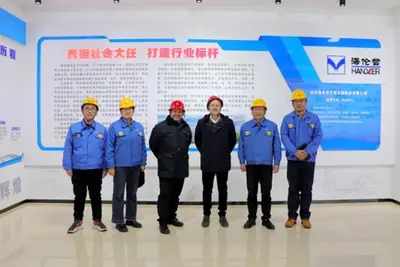 A Delegation Led by Timothy Hunt, the International Business Manager of the Italian company CTE, Visited HandlerFebruary 29, 2024On January 27th, Timothy Hunt, the International Business Manager of the Italian company CTE, along with Dr. Roberto Berritta, an expert from the Research and Technology Department, visited Helenzhe w...view
 Exploring the Diversity of Special-Use Vehicles: Essential Tools for Specialized TasksApril 9, 2024Special-use vehicles refer to vehicles that are specially designed and adapted to perform special tasks. Special-use vehicles play an important role in various emergency rescue, engineering operations...view
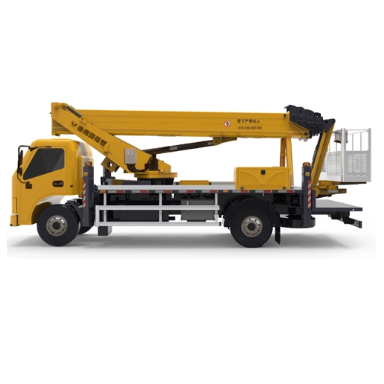 Forklift Aerial Platform vs 37M Hybrid Boom: Which Is Safer and More Efficient for High-Altitude Construction?June 30, 2026When contractors, rental fleet managers, industrial maintenance teams, and construction procurement departments evaluate a forklift aerial platform as a cost-saving access solution, the initial logic ...view
 The Role of Power Generator Trucks in Supporting Large-Scale Events and FestivalsApril 9, 2024Events and festivals are always exciting, they bring together laughter, culture, and joy. Behind the scenes of these glamorous events, however, there is one indispensable contributor: the power genera...view
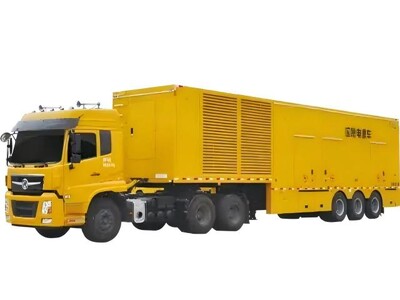 Mobile Power Supply Vehicle: A Complete Guide for Emergency Power SolutionsSeptember 2, 2026Unexpected power failures can create serious challenges for critical industries, emergency services, and public infrastructure. When fixed power systems are unavailable or additional electricity suppo...view